Shifting Into the Tracker Mind: A Conversation with Richard Vacha
“Oh my gosh, it’s not just looking at footprints in the mud, it's paying attention to everything!” This is the “Ah ha!” moment that Richard Vacha’s students experience time and time again.
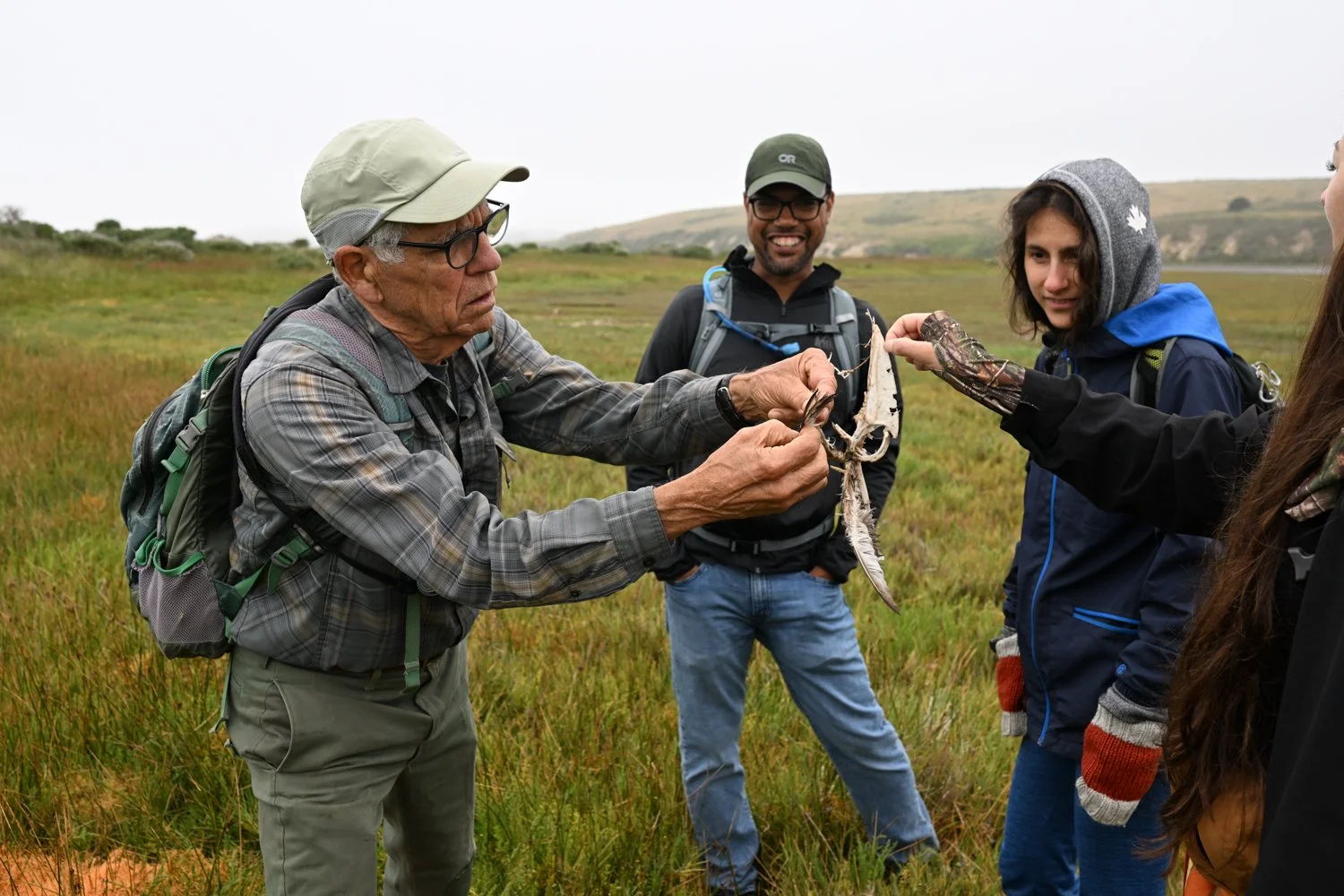
“Two or three hours into a tracking day everybody's pretty much a team. Everybody's finding different things. Everybody has their own talents. There's a sort of joy that comes out of that”—Richard Vacha
Richard Vacha is the founder and teacher of Point Reyes Tracking School, founder of the Marin Tracking Club, and author of The Heart of Tracking, a collection of essays originally published as a column in the Point Reyes Light.
On a clear September morning, just a few steps from the parking area at Bear Valley Visitor Center in Point Reyes National Seashore, Richard gathered a group of his tracking school students around a picnic table. Just minutes into class, Richard had already dropped to the ground and was belly-crawling towards a small burrow. A moment later a gopher popped its head up and looked around before disappearing back into the hole. After pausing to allow the gopher to retreat Richard reached his hand into the hole. I winced.
I would soon learn about Richard that he doesn’t worry about crumbling a coyote scat between his fingers, pulling out tiny jaw bones and hip sockets to analyze the animal's last meal, before eating a sandwich for lunch. He’ll encourage his (sometimes reluctant) students to use their sense of smell to confirm the ID of a bobcat scat. He’ll get on all fours to demonstrate how a deer would have moved across the dunes, the places where its dewclaw came down because deer usually only walk on their hoof. He’ll uncover vole runs in the tall grasses, always repairing the damage afterward. At almost eighty years old, he doesn’t think twice about scaling a barbed wire fence (note, he only freely crosses fences where the public is allowed) or trekking through the Sierra Nevada backcountry off-trail.
Watching Richard immediately challenged my own mindset, one I’ve adopted unconsciously and without my consent. A sort of “look but don’t touch,” attitude, as if wild places are a museum and I am a child with sticky fingers. An overly cautious passivity and separateness from the landscape. Richard has a different way of doing things. He has fully integrated himself with the landscape. He seldom relies on “sit spots” to wait and see what animals might appear. He doesn’t hold still long enough. Instead, he actively follows his curiosity, always keeping a notebook with him, where he jots down his “sacred questions,” an ever-growing list of big and small unsolved puzzles. He looks for animal tracks and signs everywhere (and, as he frequently reminds his students, these signs are indeed everywhere), and deciphers them using all five senses. He is working out not only which animal was there but also what they were doing, how long ago they might have been there, and what their motivations were. The answers to these questions can often be found in the smallest details. Pressure releases, substrate, gait, tooth marks. Weather, season, plants, and tides. Pretty soon all the details start to come together, weaving a story about the scene that unfolded right under our feet before we arrived that day.

Tracking school students walking through coastal dune habitat
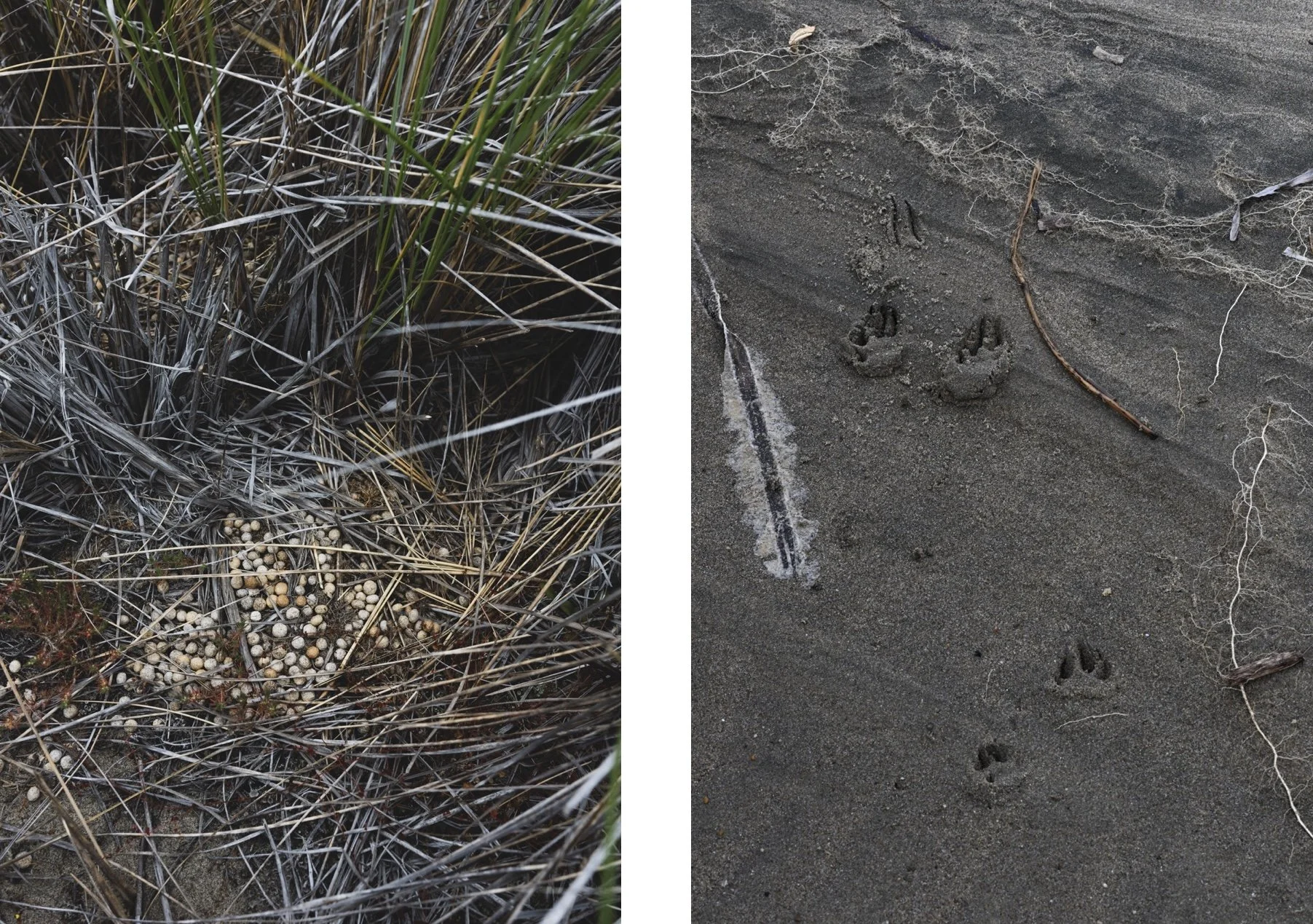
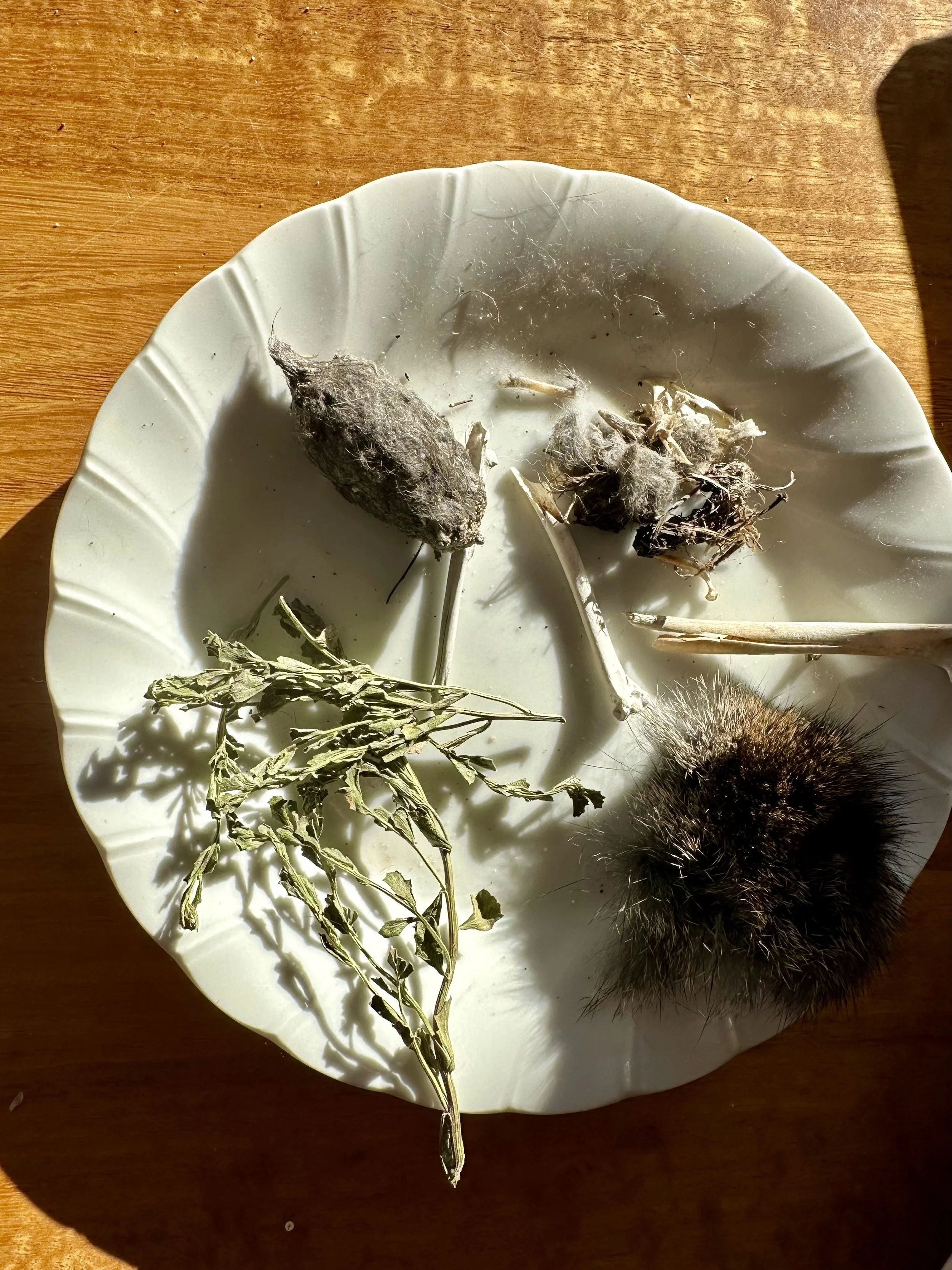
Brush rabbit scat (left) and rabbit tracks going up an incline on wet sand (right)
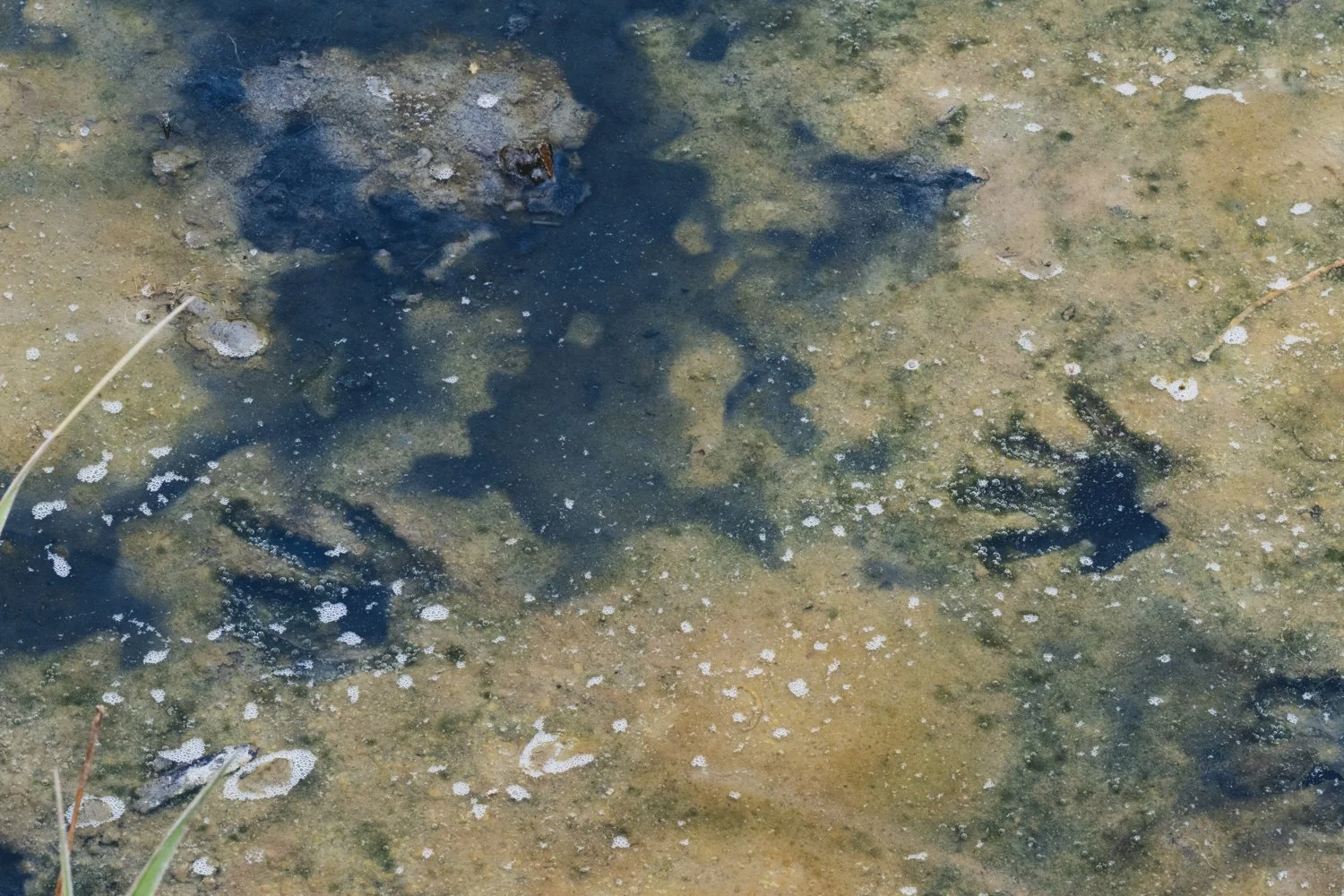
Raccoon prints in tidal marsh
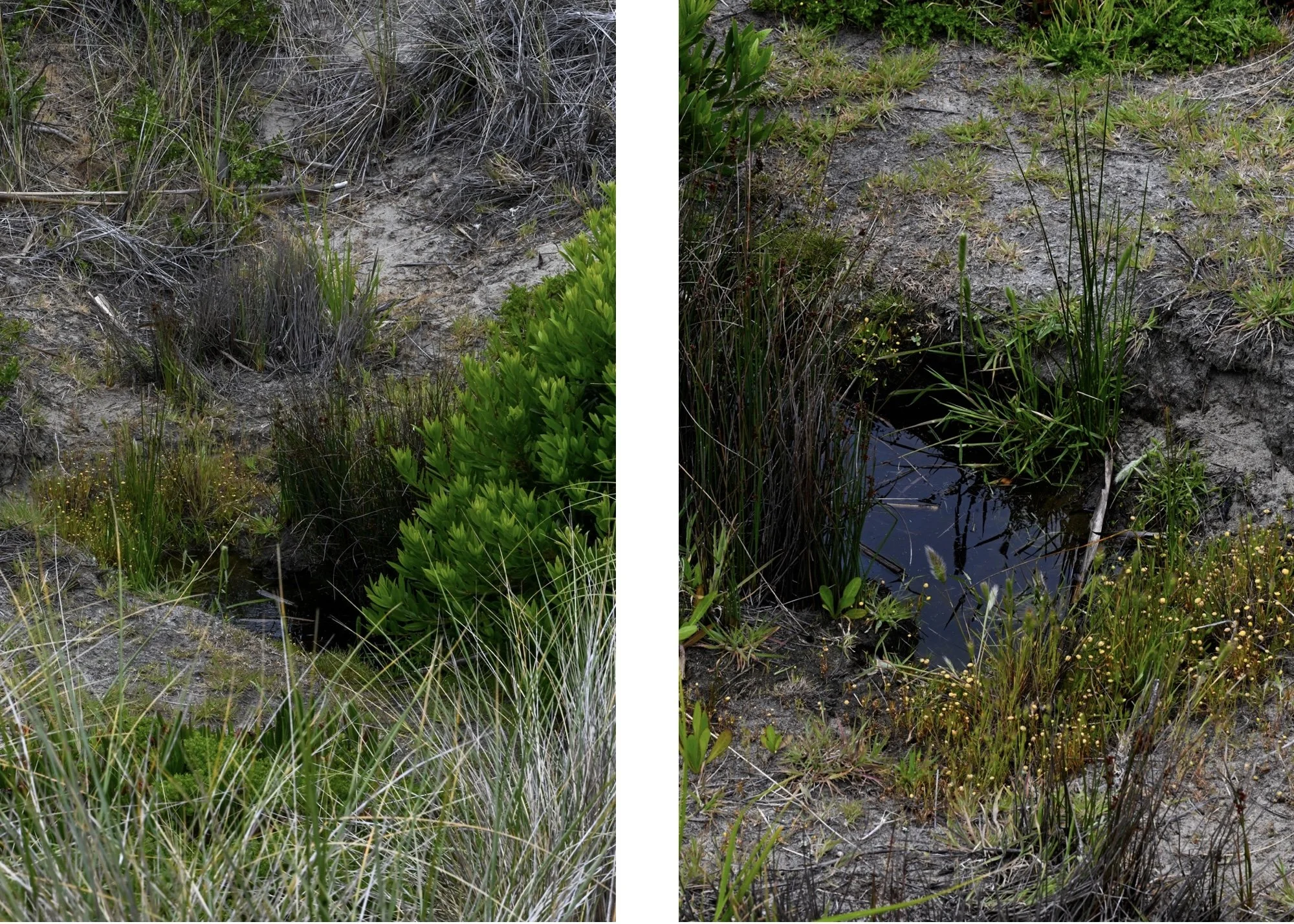
A coyote well in the dunes. Coyotes have learned to dig a pocket in the sand to access the freshwater that collects in the dunes during the rainy season. These coyote wells become central to the ecosystem because they benefit many other species that make use of the freshwater.
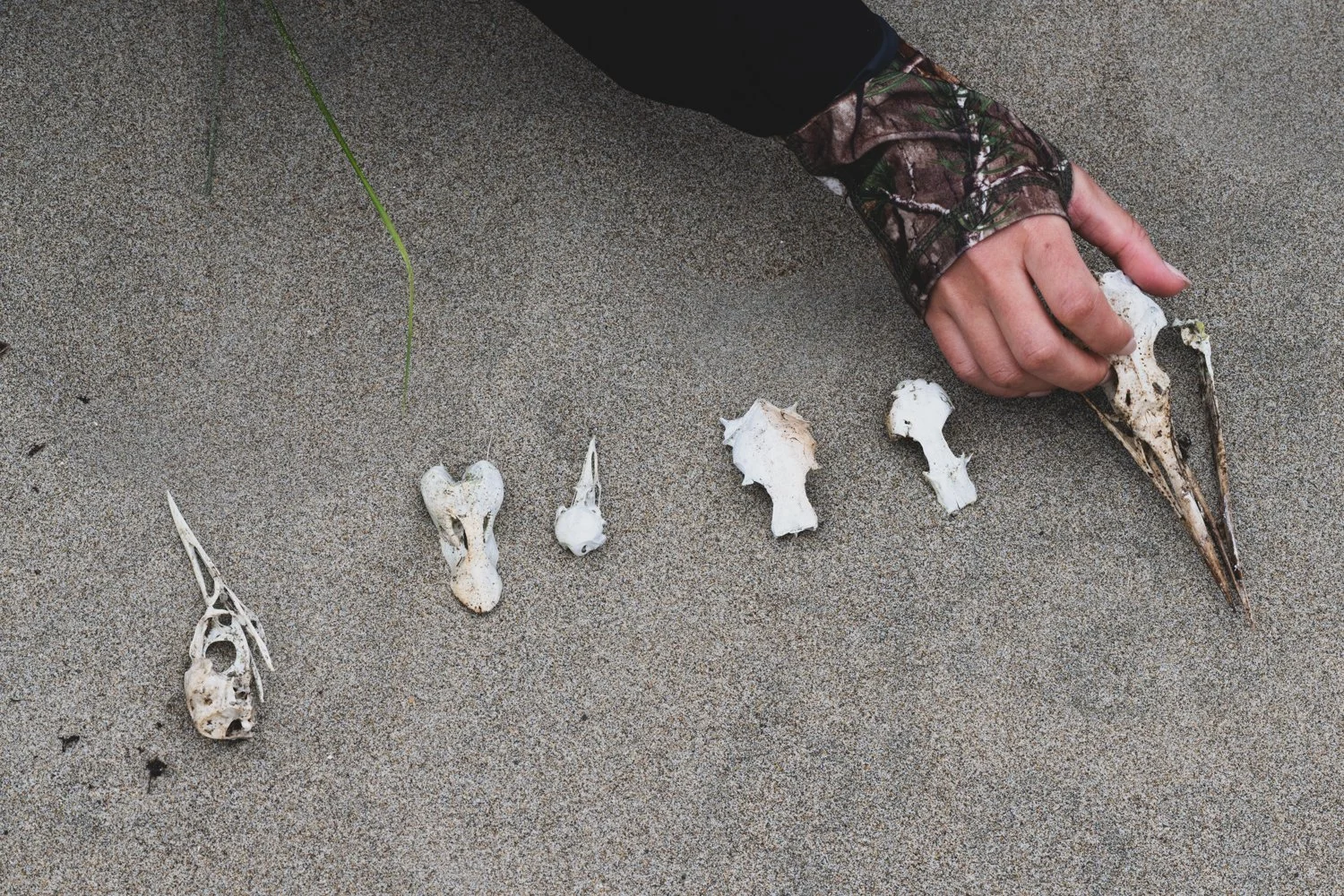
Near the coyote well, the students located deer prints and a variety of bird skulls, possibly scavenged by a raccoon and brought back to the privacy of the dunes
GW: I’ve been thinking about what you call the “Tracker Mind.” It’s the theme that overlies everything I’m hoping to talk about with you today.
RV: It is interesting how different the “Tracker Mind” is from other fields like biology and nature adventures. It's a different way of approaching the world. My students remark on it, and when they kind of get it, they’ll say “Oh my gosh, it’s not just looking at footprints in the mud, it's paying attention to everything!”
GW: When I first opened up your book The Heart of Tracking I was drawn in instantly. I've been interested in nature and being outside my whole life but I had never really tried to identify a track or a scat. I hadn't thought about how paying attention to those small details has the potential to open up a deeper understanding of everything that's going on in the environment. Now I do want to pick up those tracker books with all the little photos and drawings. I have a growing stack of them on my bookshelf. But I had to have a reason first and your book gave me that.
RV: My book fills a gap that other tracking books haven't really gone into. That relationship and that mindset is really what it's all about.
GW: Was there a defining moment when you knew you were going to throw yourself completely into tracking?
RV: I was doing a lot of sneaking around in the woods, just getting off the trail and thrashing up canyons and exploring everything. And a friend of mine found Tom Brown's first book, The Tracker, and said, “You might be interested in this.” It was what I was looking for when I was 15 and couldn't find. I was in Boy Scouts but the “scout” part of Boy Scouts was fading out. It was becoming a boys' social group and Christians were taking it over so it became a Christian group. I was right there. I was in seventh and eighth grade. I was reading nothing but animal books and my teachers were telling me, telling my parents, that they needed to get me reading some other kinds of books because that's all I was reading. I wanted to find out this information and then kind of gave it up because there was just a limit. Tom Brown brought all that back. It was straight to the source of what the Apache Indian tracker had accumulated through hundreds of generations and passing it on. That was the dive back in.
Tom Brown talks about moving slowly. It's the essential tracker practice that we do. Stop, wait a minute, slow down, take a few breaths, and then just take a few profoundly slow steps. And the world shifts.
So there I was just walking down the Sky Trail on the top of Mount Wittenberg and I just slowed. I didn't really know what I was doing. Now I call it “shifting into the tracker mind.” I started moving really slowly and opened up my awareness. It's pretty instinctive to do that. I was moving only when the wind gusts blew. I came around the corner and there was a bobcat. It was instant verification. We looked at each other and then he took off into the woods. I triangulated to where it looked like he was going and was moving really slowly and 20 or 30 steps in, there he was sitting by a tree and I came quite close to him. I saw he not only didn't get frightened, but he kind of got curious and so he was checking me out. He's fully aware. It's not that you've masked your steps completely, but you're in a different mind state. That's the core of it all. And it's a really difficult thing to describe. It's important to avoid getting too cosmic because it's actually quite physical. And yet it's way beyond the physical. So it's an interesting state. In tracking, we call that “lowering your profile.”
GW: So there's that physical element where you're slowing down, you're paying attention, you're opening up your awareness. How does that mindset become noticeable in the physical world?
RV: It affects how you're moving. Your presence. All the animals, all the way down to the insects, are all so much more highly attuned than we brilliant humans. We are so brilliant in our minds, but we're missing so much. I think bird language is key to that. All the animals are listening to the birds and watching the birds. Part of bird language is their movement patterns. They have certain movement patterns in certain situations, and all the animals know how to read them. Tracking is going into the senses and using the mind to analyze all of the sensory information and understand it. It is to be aware of where you are and what's going on. And then what's the appropriate way to move in a particular spot?
Out on the Abbotts Lagoon Trail, in the flat spot just before you get to the bridge, a puddle forms during intermittent rains. The mud at the edges of that puddle becomes the most perfect tracking substrate that I know of. Recently we were out there looking at little tiny mouse tracks. In the dark mud, the tracks look smaller than they do on the white page of a tracking guide. On the rear track, you could see three little heel pads, the tarsal pads. You could even see the little tiny thumb pad just faintly in one or two tracks. That's a pretty rare track to be able to see all that.
In my years of tracking, I've developed a patience to look at finer and finer and finer details.
In our human activity, we are very focused on a certain type of fine detail. All of our computer work, and microscopic technology. I realize we've gotten really good at looking at artificial information, which is a creation of our own logical brain structure. We are so far into that, down onto literally the microscopic, the electron level. It takes a different kind of attention to look that closely at track.
That little mouse track, that's the result of hundreds of millions of years of evolution right in there! Every part of that foot is related to the environment. So any one track is infinite. And not only is it related to the world in an infinite number of ways, but it expresses the life of that animal in an infinite number of ways.
A large part of my teaching is to try to help my students to slow down in their minds enough to actually be able to see what they're looking at and appreciate that depth and complexity. In tracking it's pretty simple. Just go into the senses. Light. Sounds. How does the ground feel? We have an extremely complex internal sensing system that tells us what's going on in our bodies and where all our parts are and tuning into that, our body is a radar system picking up so much.
On Deer Foraging
I've always been mystified by how to tell what deer have been nibbling. For years I would look at a deer browsing in the grass and notice that specific spot and go over to it and look right where he was feeding and can't find any feeding sign. It was always bothering me. I was over at Bear Valley, along the edge of that big meadow, a couple of months ago after the first rain. All the new little plants in the field were just starting to grow, the little poppy plants were two or three inches. There was a mother and her two yearling kids just browsing away.
So I got down on my hands and knees and spent about two hours just slowly following them. They were just staying about 15 or 20 feet ahead of me. I was looking carefully at what they were doing and which plants they were eating. There are five different species of forbes growing there including Plantain, blue-eyed grass, and poppy. They were all small and the deer were just nibbling the tiniest little single leaf off some of those baby plants.
It took me a lot of looking to see, to finally get an eye for how to tell what they've been feeding on. They're just so careful. It's remarkable. Sometimes they'll nip the whole growing stem of a plant off so you're looking for what's missing. My mind, my way of looking started to shift a little bit. The more embodied the knowledge becomes, the more it doesn't get forgotten. At first, you're just kind of registering in your brain, and it can be quite overwhelming and confusing. Becoming a good tracker takes more than one generation. So we're kind of starting over. I've got a long way to go, but I'm slowly learning to tell the difference between the shape of a Bobcat toe versus a coyote toe in a partial track. That's been elusive for years and I'm finally kind of starting to get it.
GW: Since I started taking your tracking class, everywhere I go I'm starting to look in a way that I wasn't before
RV: For my bones and feathers classes and my collection, I've been taking apart scats and looking at the teeth and bones inside them. The core thing that I love about it is developing an awareness of the morphology in nature, the patterns of the tracks, as well as the shapes of the bones. They all make sense because they are so precisely dialed into a certain niche in nature. They evolved over millions of years. In every single tiny area, there are infinite things to figure out.
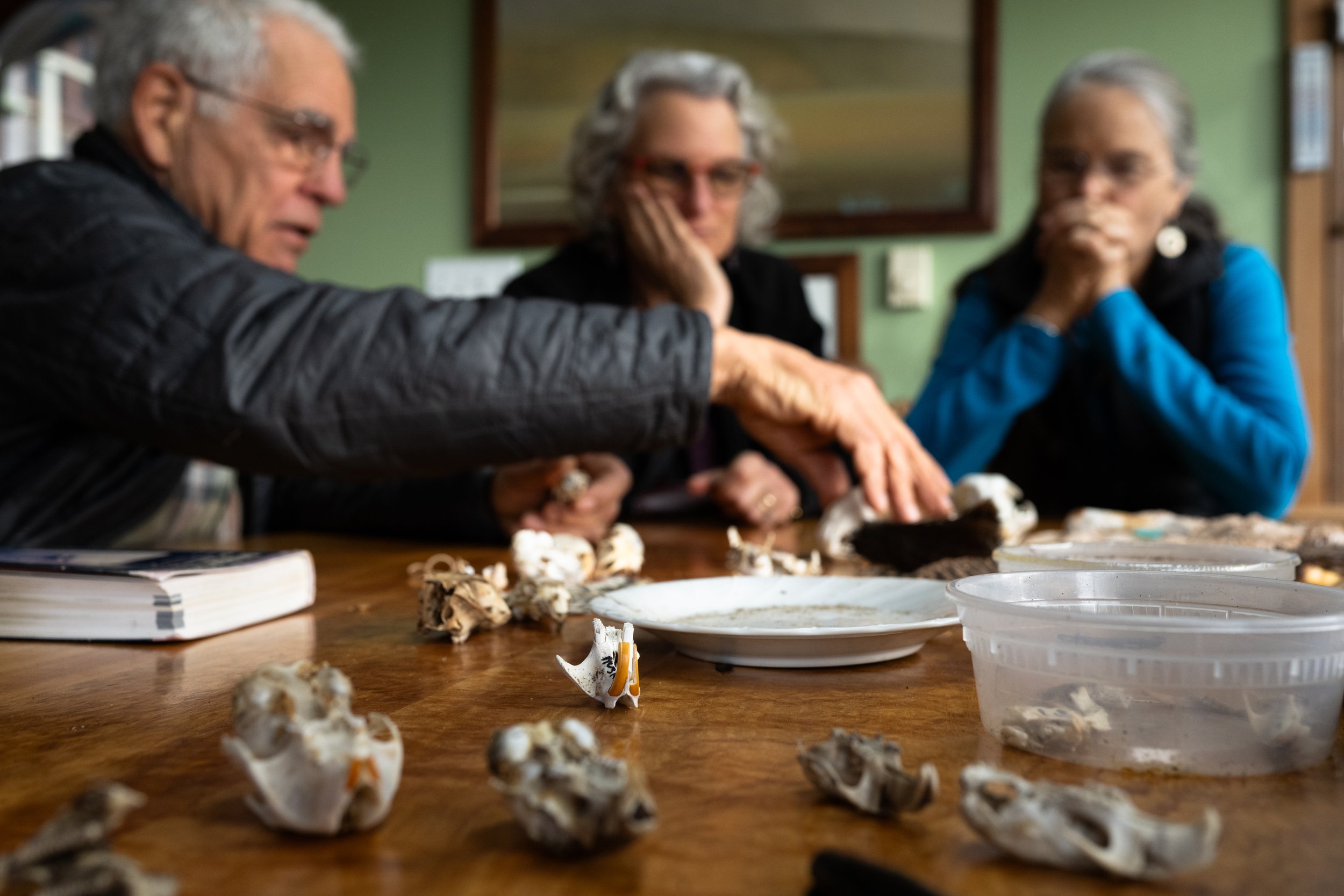
Analyzing feathers and bones
On Coyote Tracks
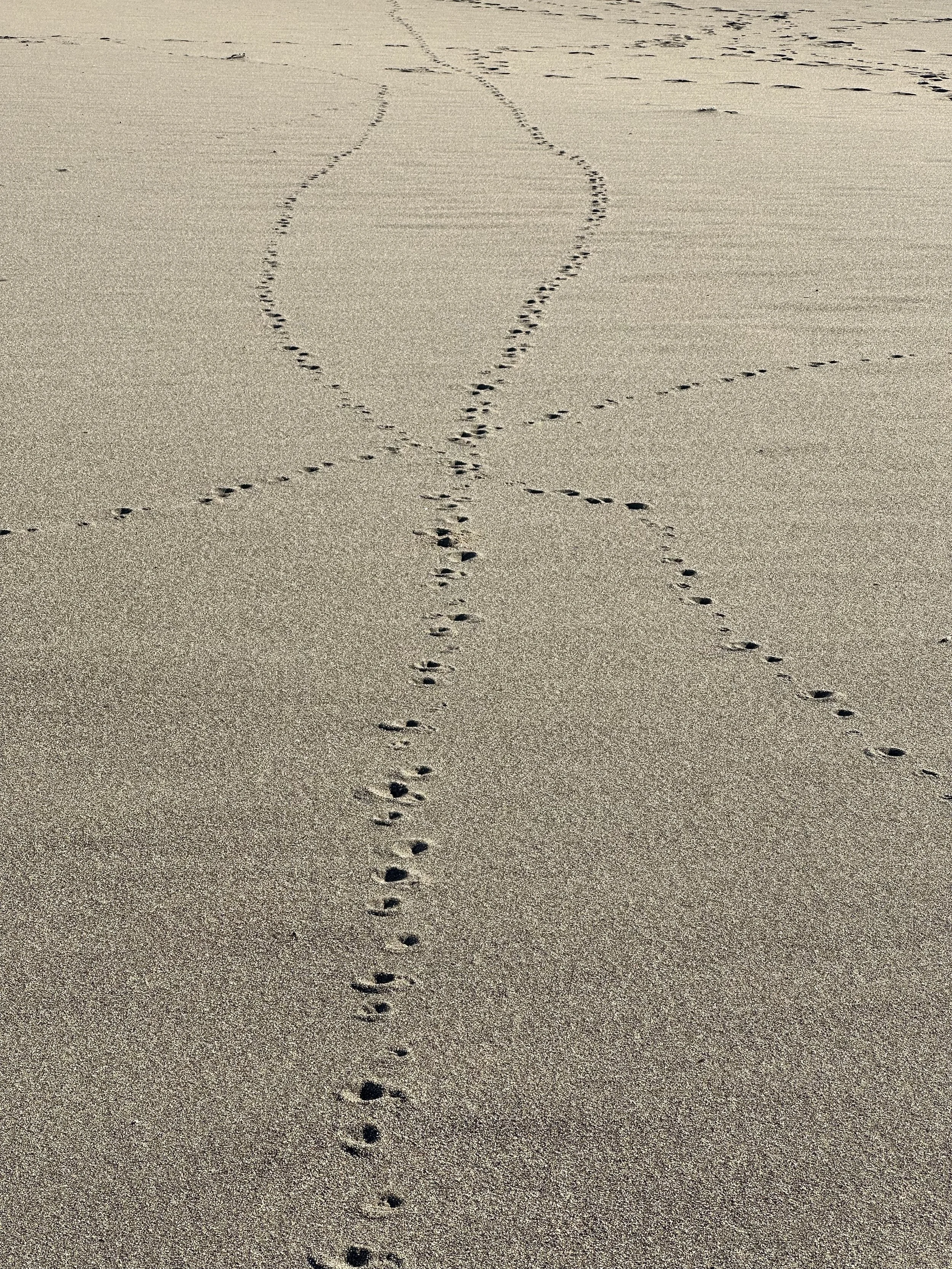
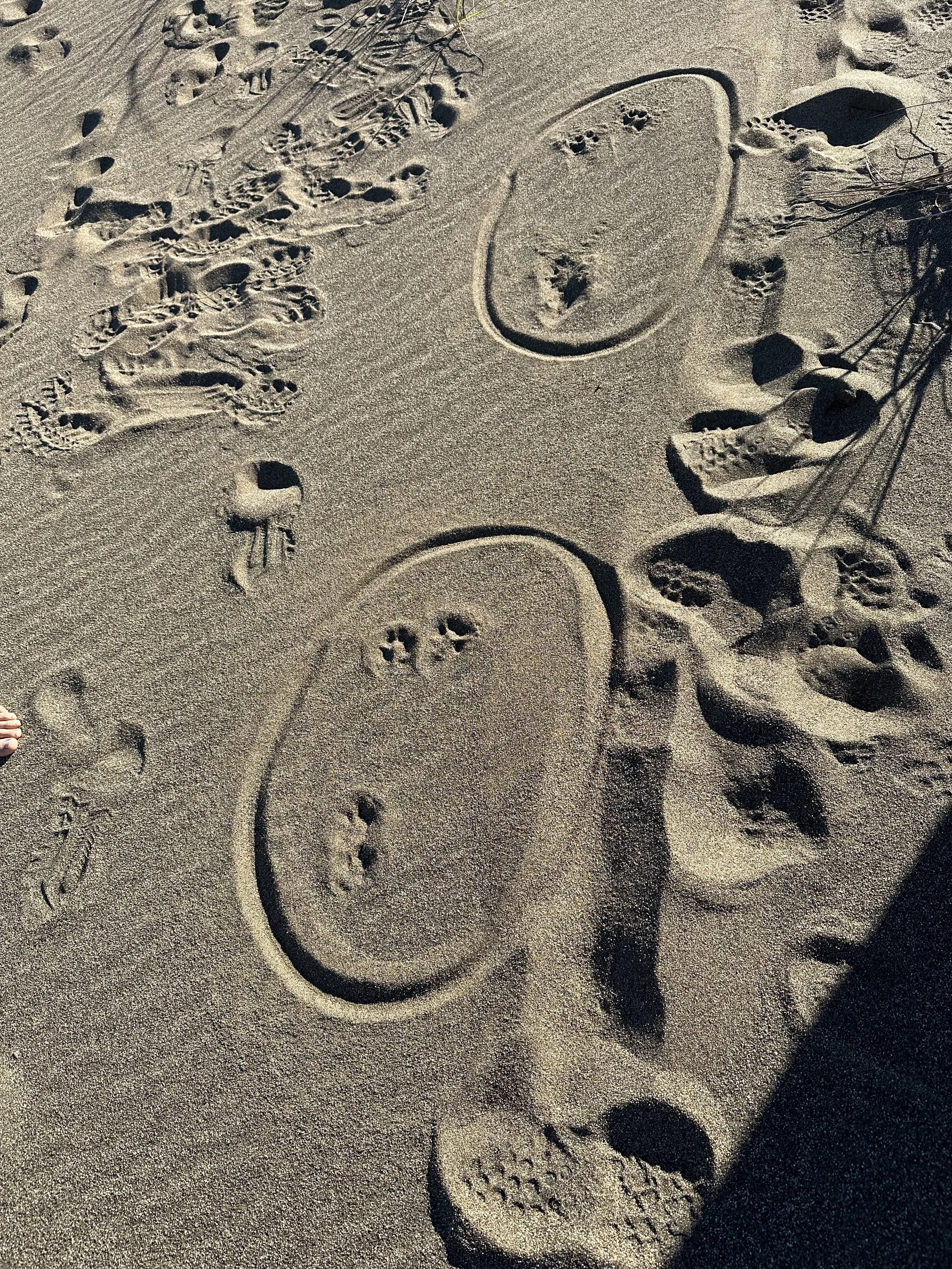
I went to Kehoe Beach yesterday because the tide was right and I figured there would've been coyotes in the pre-dawn, scavenging along the high tide line. I figured we’d have time to find some good clean trails, that was my goal. And we did! You can tell right and left prints even if you don't have the rest of the track. You can tell by those slender, long, kinda sharp, toenails that coyotes have. The two middle toenails slightly bend toward each other, and the nail on the middle toe (between index finger and ring finger) is just slightly longer. It's the same as our hand. We still have the same morphology as all these other animals. That foot and hand is this universal shape and the way it falls off from the middle toe. That's a consistent thing in their tracks. That's the thing that takes it out of just pure memorization. For me it's when I understand why something is that way, then I don't need to remember it anymore.
GW: I don't think we, in general, like to memorize things just to memorize them
It's not just an item on a long list, it's fully integrated. A belief that I bring to tracking is anything that I don't understand makes sense in itself but I might not have gotten to where I understand why it makes sense. As an observer on this level, I'm quite often way beyond science. Most of what I’m observing has not been studied and reported and verified and peer-reviewed yet, because science hasn't gotten into this level of what things are all about. Simple little details in an animal's tracks relate to the whole physiology, and how the physiology is adapted to the world that it lives in. That's one of the magical things about life in general is how it designs into specific little niches that are complex in and of themselves.
On Striped Skunk Feet
The striped skunk, whose foot is quite different from the spotted skunk, tends to be plantigrade on the back foot, their heel drops down. Why does that skunk step down on its heel pad so much? Most animals are just up on their palm pads—digitigrade. When you understand what the skunk is doing it's related to why those toenails are so much longer on the front foot. They're spending most of their working time digging. They'll get into a spot where there's an insect hatch and there'll be all these little focused conical digs down to the bug, which I'm sure they're finding by smell. I think they're all about smell. It occurred to me that we know how insects are all about pheromones and they communicate by smell. A moth over there knows that there’s a moth over here that's ready to mate. Those individual molecules of the pheromones are spreading through the air and the antennas are designed to pick up that one specific molecule. This is the microscopic world of life! So it occurred to me the insect is all about communicating by scent and the skunk has learned how to interpret that scent and find the insects underground. The heel is all about that. So he's back on his heels digging. The heels on the back feet are applying the back pressure in order to counteract the pull pressure of the digging activity. The heel helps them balance more. So it's not about the back pressure, it's about the balance. That totally makes sense. It's just completely mechanical.
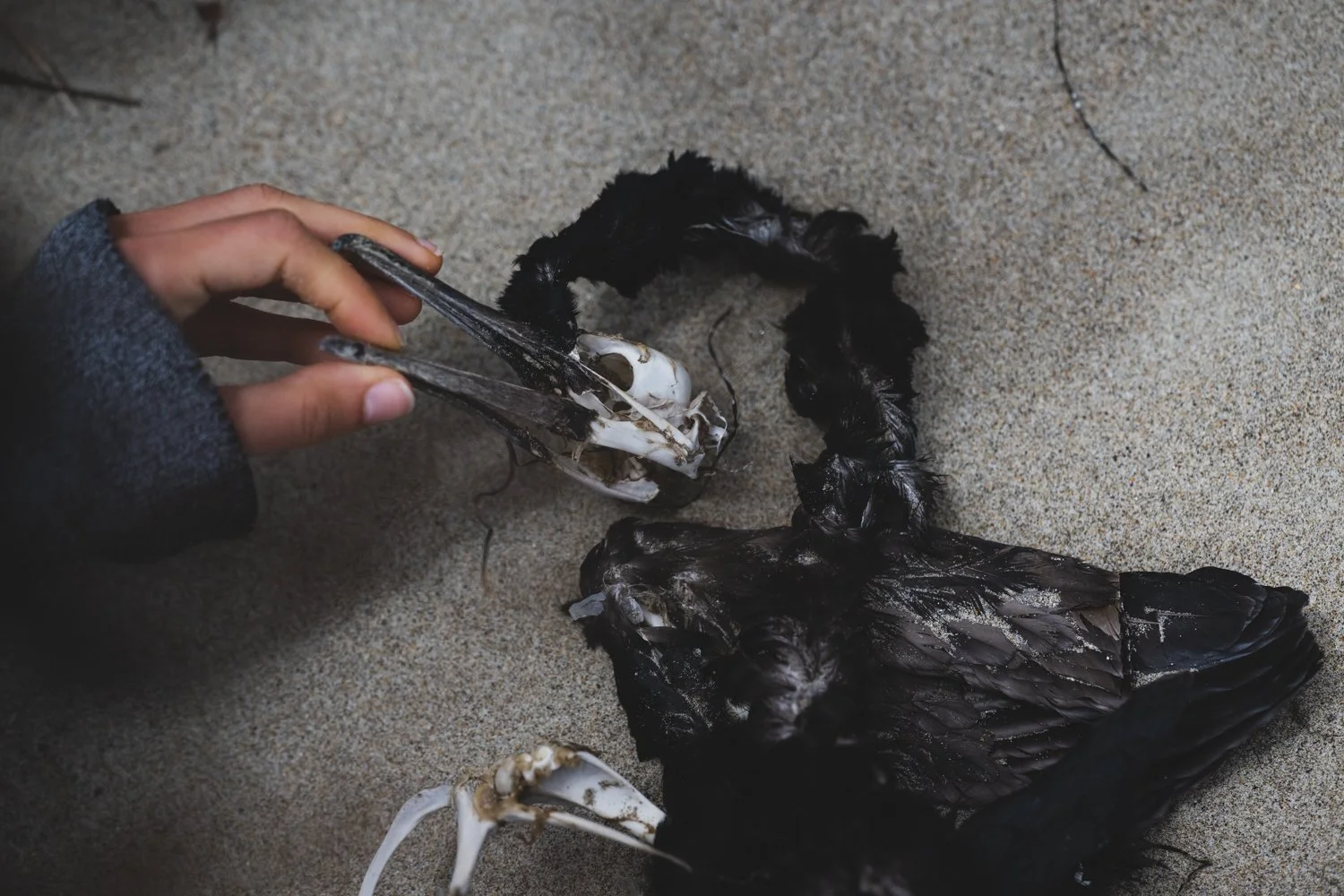
Cormorant remains
GW: Will you explain what sacred questions are and what they mean to you?
RV: Some of them are fairly deep and subtle questions that are hard to even articulate and yet you feel a sense of curiosity. Those are the kind of questions that might just sit in the back of your mind, just something that you're almost just only slightly aware of, like a little tickle. Other things are just, Why is that? Why does that raccoon show that back foot like that? Why did he put his weight down on his heel?
I'll do a bunch of research in my books. The internet only goes so far and books often go further. But sometimes you can't find the answers because they're not out there. The mission behind my purpose in teaching and writing is that we lost something really important in separating ourselves from nature. In the Christian world, turning nature into sort of the enemy and getting equated with the devil.
I always have my little notebook. I can go back in there and many pages are filled with questions. Nature is just so full of mystery. That has been one of my biggest learning tools, to write questions down as they come up. They come up rapidly and lots of them. And sit down and look for the answers. Some things you can find the answers to and some things you can't. So they'll just kind of sit back there kind of calling out for an answer. There is this sense that the question sort of attracts the answer. And sometimes surprisingly, you'll come across the answer quickly. And sometimes the question will sit back as a little bit of a mystery that you've had for years, and then somewhere in the world, you'll come across the answer.
GW: What is the importance of having a community when you're doing tracking versus going it alone?
I love that feeling of group curiosity. All those extra sensory systems, each finding things and bringing them into the group so you have a much larger experience. You know, I guess for me you might say that's my way of connecting with people. When I lead groups I don't want to take away from other people's struggles and experiences by having too much reliance on me. I see my leadership role as a very light and subtle suggestion of moving into sensory expansion, I’ll say “Let's take a few steps really slow.” And then there is a shift and people's minds and curiosity blend more. Two or three hours into a tracking day everybody's pretty much a team. Everybody's finding different things. Everybody has their own talents. There's a sort of joy that comes out of that.
GW: How is it different when you go by yourself?
RV: I did a two or three-night overnighter out in the park. I was out there by myself out on the far headlands from the outer headland looking down on the end of the Limontour sand spit and the Estero channel. From there I walked all the way back, toward the Inverness Ridge. I did a transect from the very outermost point up into the dense, thickets in the pine forest. It was really interesting feeling the landscape change and just watching the animal populations change as I moved along that transect and combining tracking awareness with sort of this broad open view of where I am on the landscape. I don't know if I can completely drop into that state of mind with other people.
There were more and more gophers as I moved inland. And then when the gophers finally got enough mounds, all of a sudden the badgers started to show up. It was one of the clearest examples of that gradient of landscape and environmental niche. When I got to the first pine trees there was a muddy spot and there were fox tracks. The fox is related to the forest and they're not going out into the open. That's more coyote territory. Also in the cover of the forest, you've got mice, which the foxes are more interested in. Just to have spent enough time outside and just shake everything off and really just pay attention to everything. That's about, that's the happiest I get. I just felt so free and so alive and so aware.
GW: And then when you come back, how do you keep that feeling going?
RV: That open, relaxed state of mind and tracking has taught me to notice the opposite when it's kind of closing in and becoming pressure. I have a certain schedule of what I'm going to do, how the progress of the day is going. And then the clock is ticking and that's when I start to feel like I'm tightening up.
I've learned that's a typical state of being for us in our culture. The fact that everything in me is telling me to hurry up faster is telling me that I need to stop. It is a tricky lesson, a hard lesson to learn because it's such a powerful force. I'll just stop and realize that all my senses got shut down. I was just totally in my mind with this idea of a schedule that I'm falling behind on.
For me, it starts with my hearing. All of a sudden, "Oh, birds are calling!" And then I listen to that for a second. And then I go into looking at how beautiful the colors of everything are. And then my body sensations come back to me. I take a breath. And then I kind of go, "Gosh, I'm alive! Isn't that wonderful?" And then start out much more slowly, and just accept that this path that I'm on is not as direct as I intended. Surrender to it and embrace it. I'm calling it "embracement" now.
GW: If we encounter challenges, it's easy to say, well maybe this isn't what I wanted. Maybe I'll go over here and do this other thing. But in fact, that point of friction will follow you in some other way.
RV: Wherever you go, there you are. Embracement is a way of facing it.
Since I started writing, tracking has really come back into the culture. A lot of people still haven't gotten touched by it, but around here, 15 years ago, nobody was asking “What's the difference between a bobcat and a coyote scat?” And now almost everybody that lives around here is aware of that stuff. There's just something about tracking that is way different and far deeper and kind of ties it all together. It makes you try to understand what plants are doing in relation to what the animals are doing. Not just what the plants are and have your little app that you can click on the flower and it tells you what it is.
On Health and Tracking
RV: One thing we haven't really discussed is the health aspect of tracking. I remember twenty years ago I was hearing estimates that it could take 10 or 15 years to become a good tracker. And I'm kind of going, Oh my God! You know, I started way too late! And now I'm here and I'm so much more knowledgeable than I was way back then. And now I realize that it's ongoing forever. Each of us will get as far as we get, but every step of the way forward is reward in itself, fulfillment in itself. But I also think tracking is helping me stay healthy and go longer. It's kind of gone back into me. I've been relaxing myself and relaxing my mind. Many things that I was starting to have trouble with physically 20 years ago have gone away. It was all about stress. Ten years ago I was thinking, gosh wouldn't it be great if I was still strong enough and healthy enough to go up to the High Sierra when I'm 80? I'm almost 80 now. I wrote an essay about Miro Blanco. It's about two trips that I did on the same, same really far-fetched route which I first did 50 years ago and 55 years ago. And I was wondering if I could even still do it. Not only could I still do it, but it's actually getting easier. Going up a steep slope from 12,000 to 13,000 feet to make it over a pass. I'm probably going slower than I used to be, but I don't fight with it either. I don't care. In general, I’m moving through that countryside, all the boulder hopping and mixed climbing and strange situations and camping and storms and everything. It's easier than it ever was. So now I'm kind of going, well, gosh, I might be going up there with a backpack when I'm 90. Wouldn't that be cool? Then we'll see how I assess my prospects for the future at that point.
…..One of my students gave me these last time I saw her. They're all ground squirrel skulls….
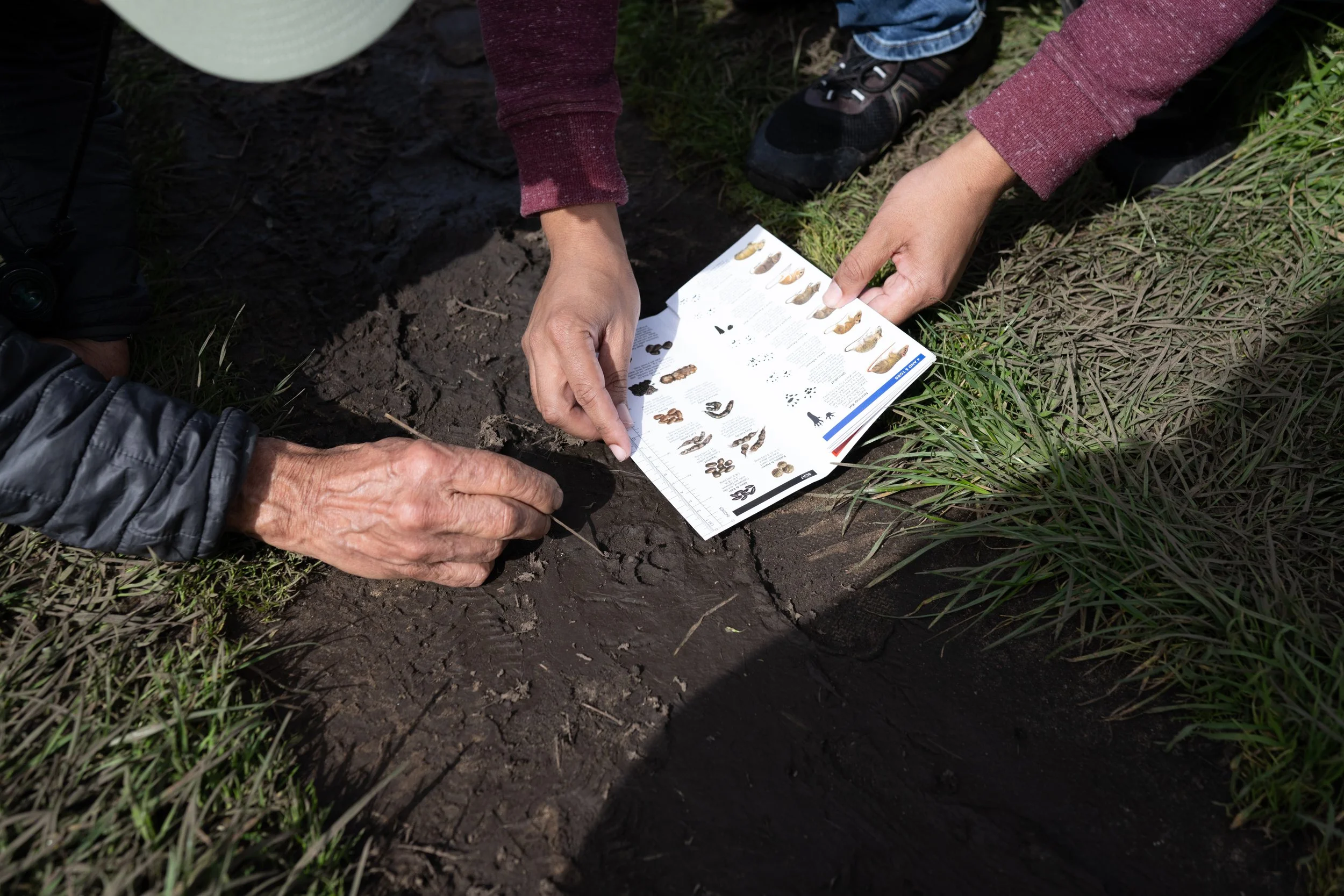
Richard Vacha working with one of his tracking school students to identify a track in muddy substrate
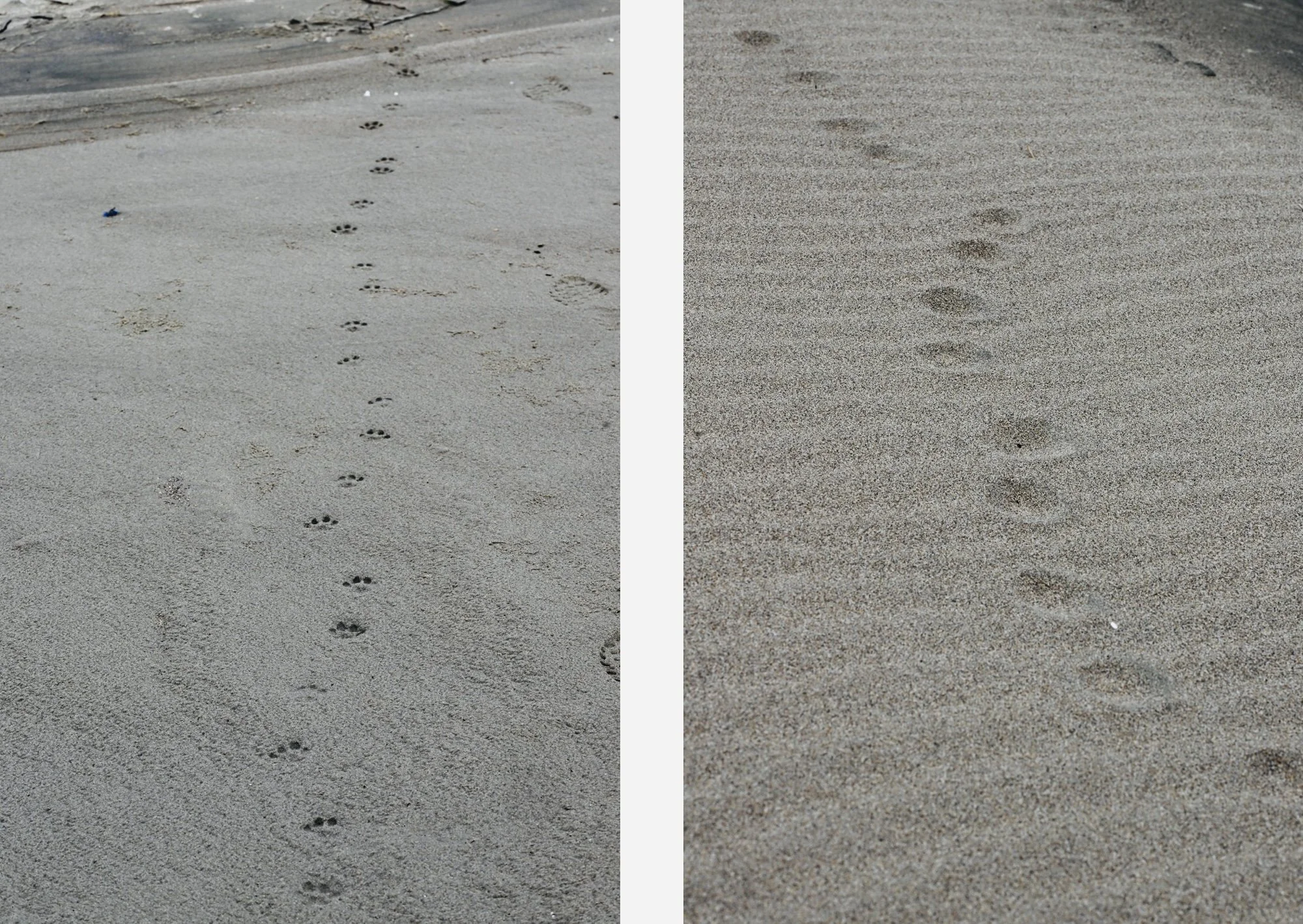
The same set of bobcat tracks on wet sand (left) versus dry sand (right)
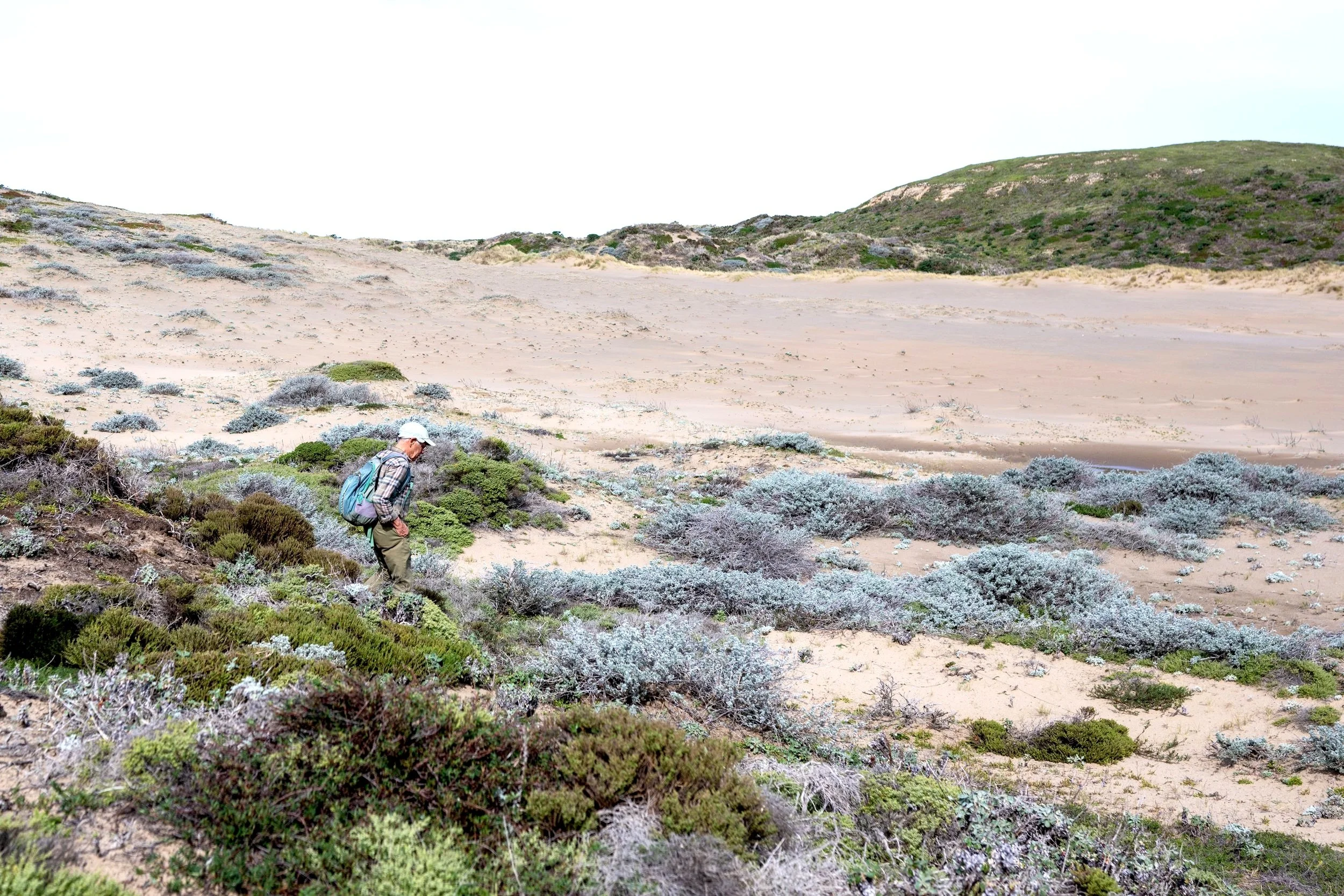
Richard Vacha tracking on coastal dunes at Point Reyes National Seashore
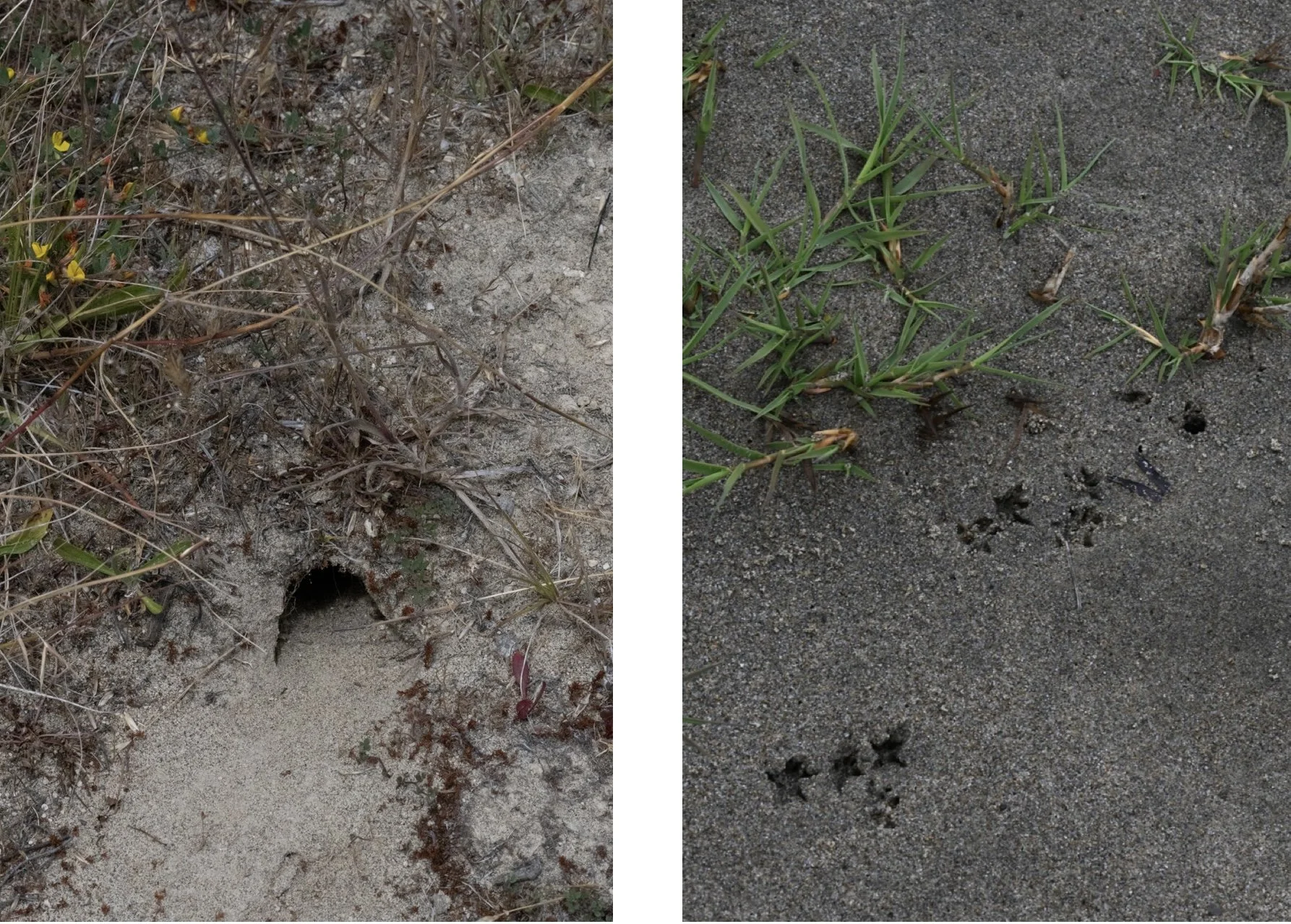
A probable mouse burrow (left) and mouse tracks in wet sand (right)