
California pipevine: A glimpse into the world of tropical plants
CALIFORNIA NATIVE PLANT STORIES
Aristolochia californica
FAMILY: Aristolochiaceae
The curious pipevine flower offers a glimpse into the world of tropical plants. It is our sole local representation of the birthworts, a plant family whose many other species are found mostly in warm and tropical areas of the world.
By Joan Kresich and Stephanie Penn
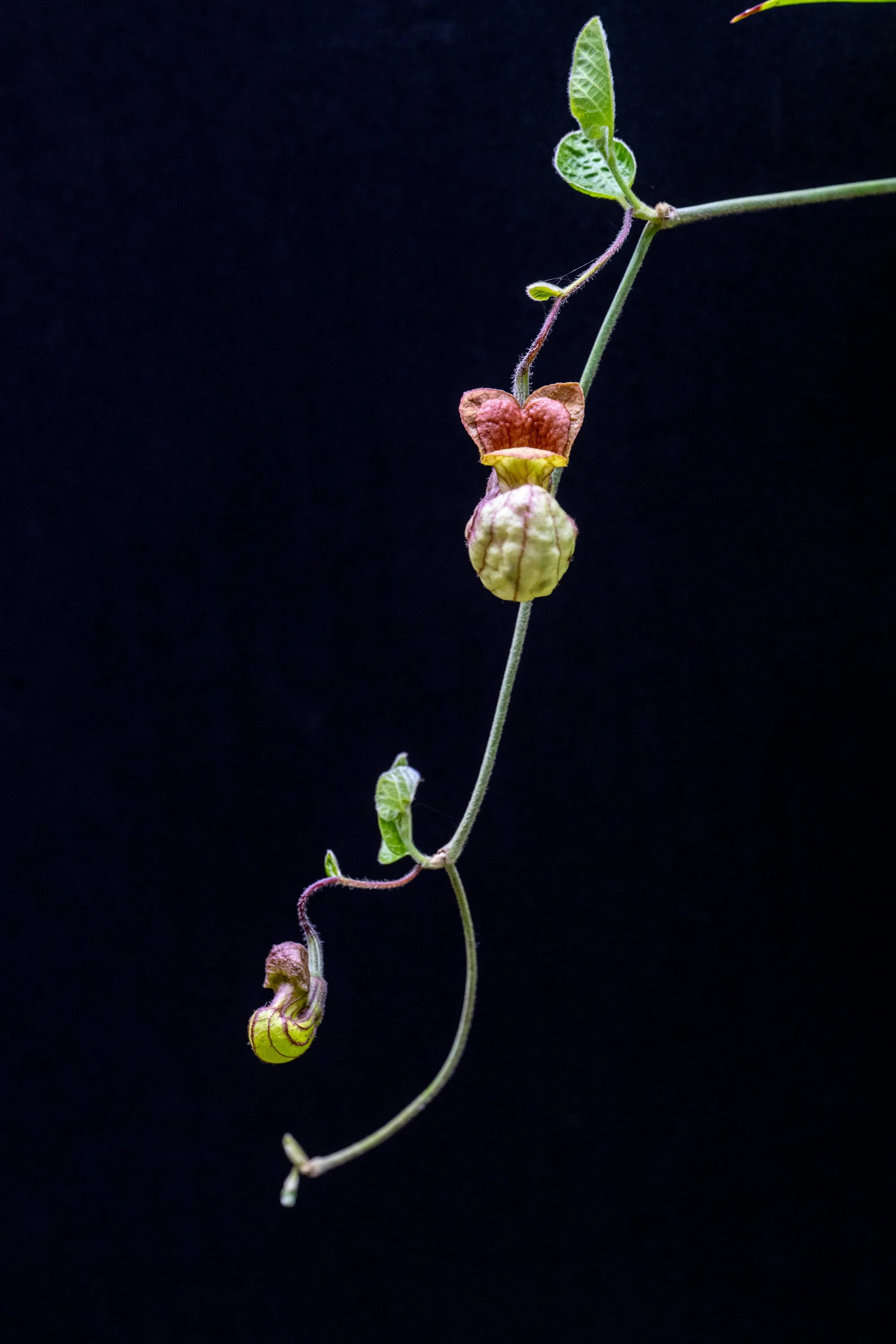
California Pipevine at Las Trampas Wilderness Regional Preserve
The pipe-shaped veined flower of the California pipevine with its open mouth and bumpy blush-colored lips is not actually carnivorous, though its carrion-like smell draws in flies which are trapped inside, then released once pollination is complete, a gentle form of plant trickery.
The California pipevine is an elegant confirmation of the interdependence and special relationships between plants and insects. The pipevine swallowtail caterpillars feed only from the leaves of California pipevine, ingesting a toxin that protects the adult butterfly from predators. Without the pipevine, the pipevine swallowtail cannot exist.
“I’ve always loved the “pipe” shape of the flowers, the weirdness of the slightly fishy scent, and how they draw flies in to help pollinate and reproduce. But beyond their inherent weirdness and beauty, I also love that they share such a close relationship with the Pipevine Swallowtail butterfly,” said Stephanie Pau, a California Certified Naturalist.
When she first noticed it growing on her property in Forestville it was being smothered by forget-me-nots. So she got to work clearing the weeds.
Once Stephanie opened up space for the pipevine plant, she noticed caterpillars, butterflies and chrysalides appearing throughout her garden every year.
“It’s been fun being able to witness the population grow in our yard and to see the life cycle firsthand.”
In addition to its relationship with the pipevine swallowtail butterfly, this plant also has complex relationships with other “flower-visitors”, and was the subject of a study published in Pan-Pacific Entomologist in 2020 by Chris Borkent, an environmental scientist at California Department of Food and Agriculture. Borkent wanted to understand which arthropods were visiting California pipevine and what role they were playing—pollinator, non-pollinator, predator, scavenger etc.
“It is obvious that flowers, instead of just being places to obtain pollen and nectar, are meeting places for insects occupying several levels of the food web.”
For the survey the research team collected pipevine flowers in a nalgene water bottle, froze them before cutting open the flowers and mounting the insects. They found a wide diversity of flower visitors but nearly four out of five were fungus gnats, indicating yet another specialist relationship.
The people who find this plant intriguing show us we only understand a small part of pipevine’s place in the complex web of life.
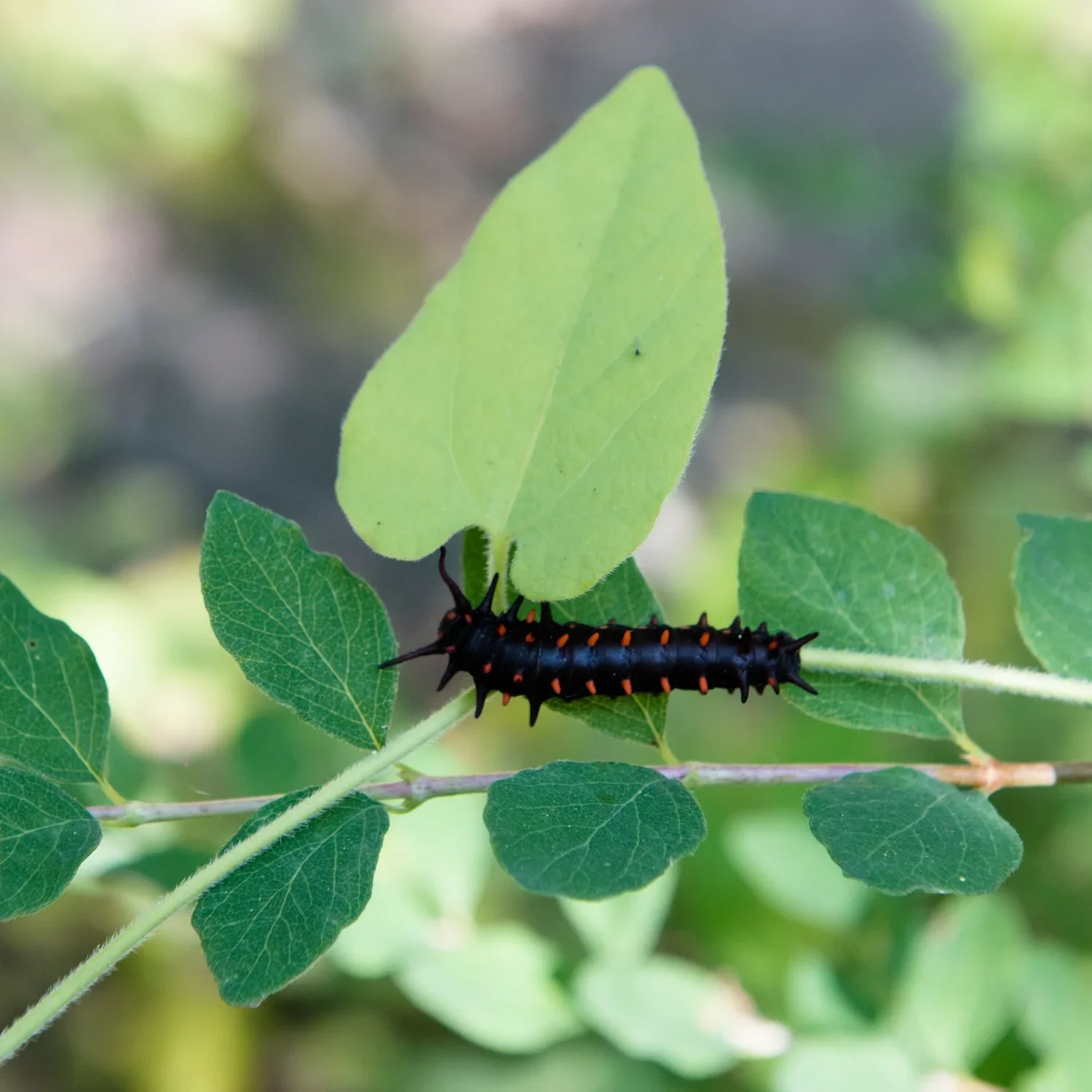
Pipevine swallowtail butterfly caterpillar at Regional Parks Botanic Garden (pipevine leaf in the single center leaf)
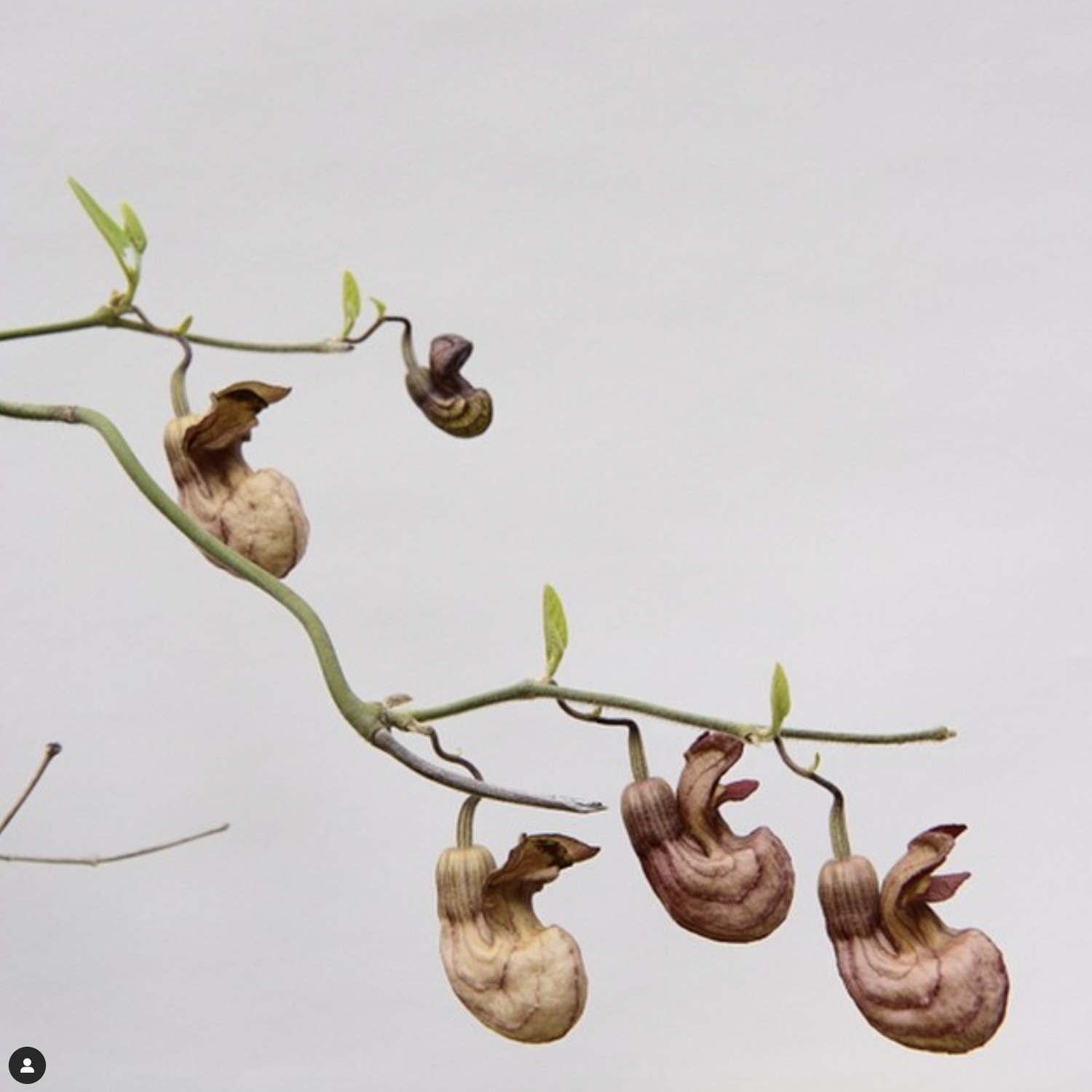
California Pipevine at UC Berkeley Botanic Garden