PALLID MANZANITA
Corrections: An earlier version of this story used the common name Alameda manzanita. Pallid manzanita is the currently accepted common name for this plant because the new leaves at the tips of the branches look pale or pallid as they are growing. Pallid manzanita is listed Federally threatened and State endangered.
CALIFORNIA NATIVE PLANT STORYTELLING PROJECT
Arctostaphylos pallida
FAMILY: Ericaceae
A love letter to Pallid manzanita: a keystone species of a rare East Bay fog-dependent ecosystem. This shrub blooms around Thanksgiving each year, congruent with the return of winter rains, marking the beginning of the new season. Also sometimes called Alameda manzanita and Oakland hills manzanita.
“Maritime chaparral,” named because it thrives in marine influenced climates, is a California plant community that depends on fog. The plant community is a rare ecological type and can only be found in a handful of places in the East Bay, one of which is at Sobrante Ridge Regional Preserve just beyond Richmond’s borders.
Winter in the manzanita grove is dramatic. As soon as the milky-pink urn-shaped flowers open around November, Anna’s hummingbirds appear in full force. Their chirps, chatters and wingbeats become the soundscape to the fog drenched hillside.
I’ve visited and written about Pallid manzanita before here and here but this year I wanted to bring this fleeting “nature moment” of plant-animal interconnection to life through a video. I spent about a week sitting quietly in the grove observing and waiting (and shivering). This plant and its ecosystem are in serious trouble. It is threatened by lack of fire, lack of fog and disease. Without intervention, botanists say Pallid manzanita could be gone forever in less than 30 years.
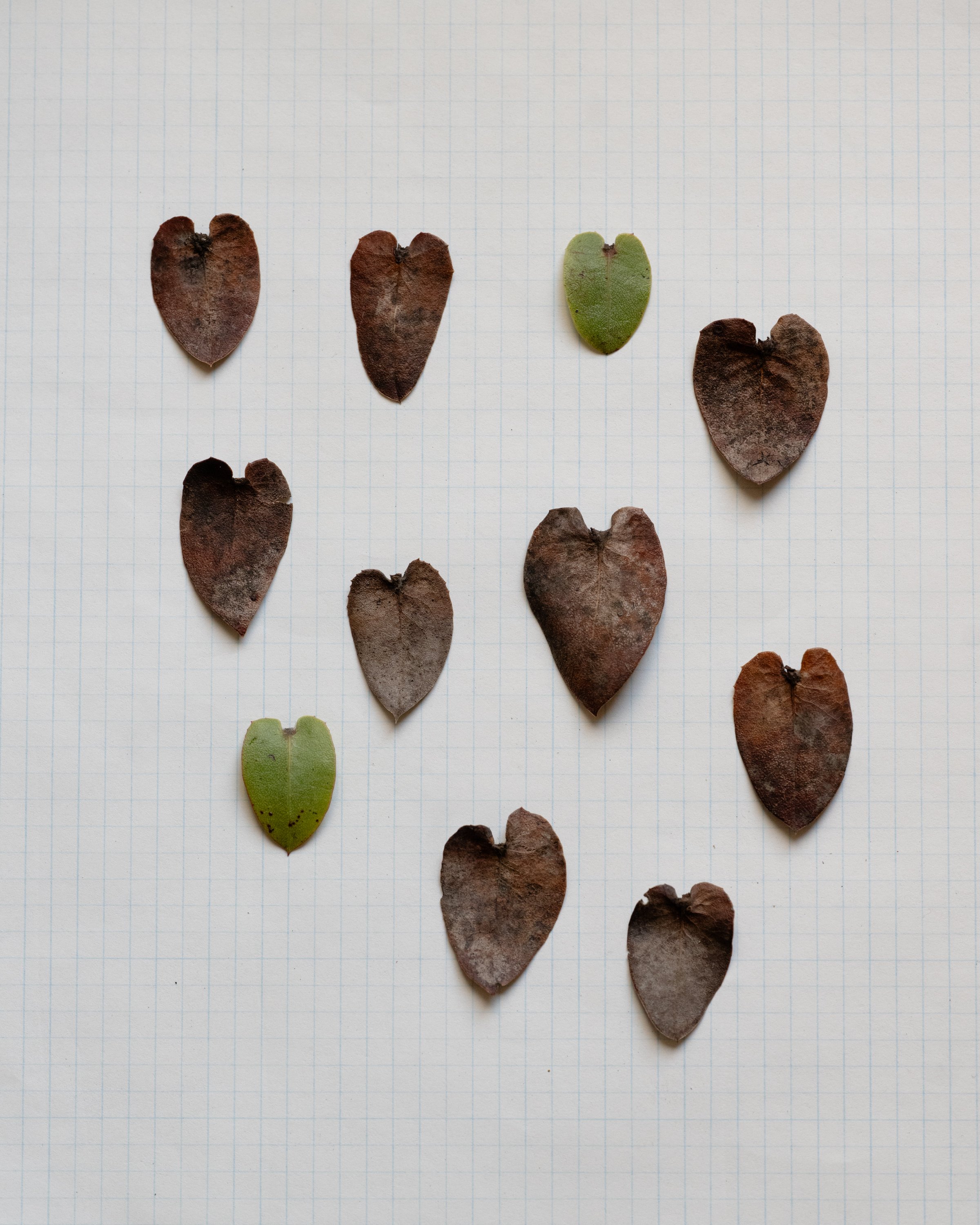
Heart Shaped Leaves of Pallid manzanita. According to V. Thomas Parker, a biologist at San Francisco State University, Manzanita pallida is a “classic fog species.” It has a lobe shaped leaf base called “auriculate” because it looks like an earlobe. “You have a super rare plant with similar morphology to other rare plant species only found in fog,” said Parker.
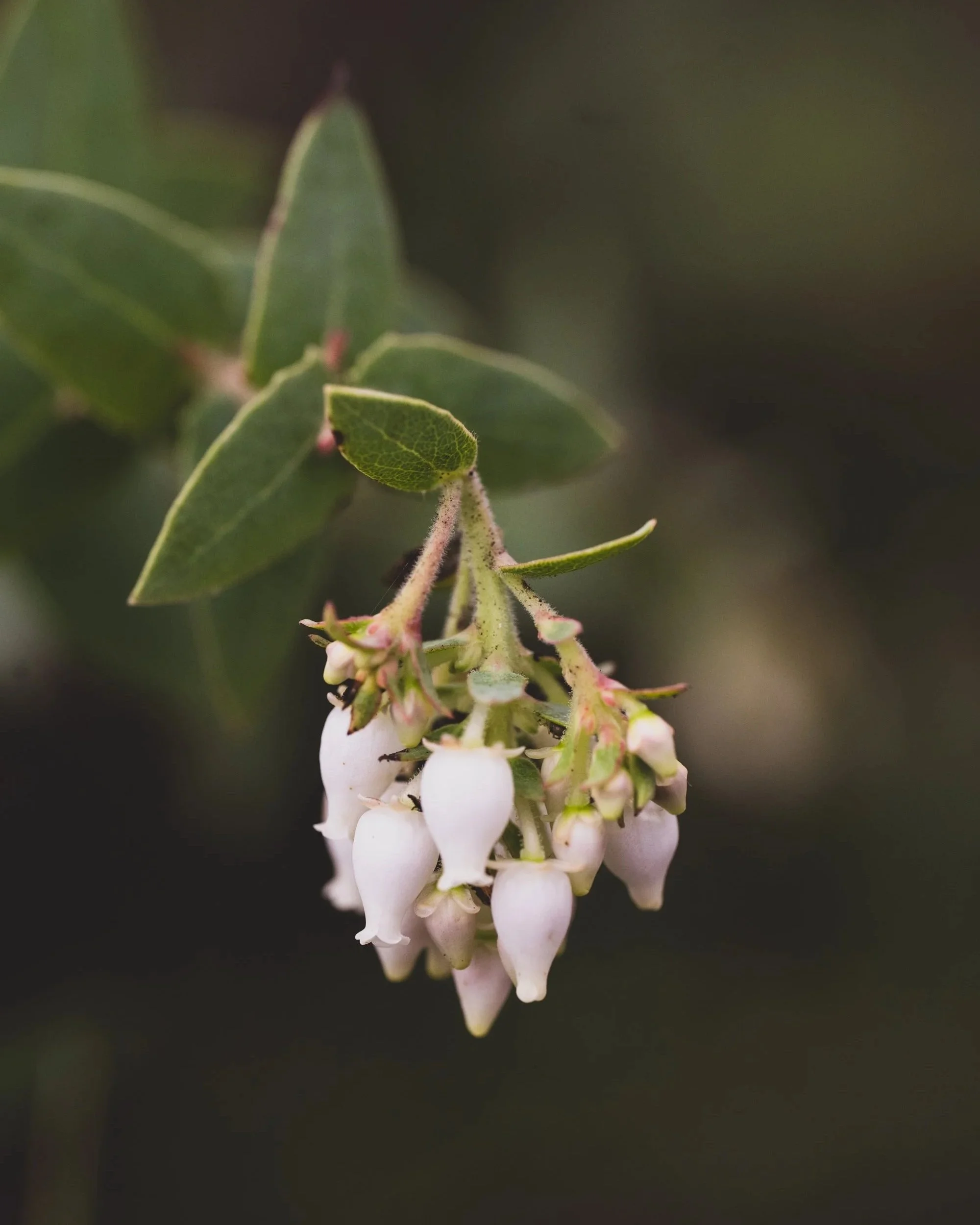
Pallid Manzanita (Arctostaphylos pallida) is mainly found at Sobrante Ridge and Huckleberry Botanic with isolated additional plants found on other properties that surround the two preserves in Alameda and Contra Costa counties and nowhere else in the world.
CONSERVATION STATUS
Pallid manzanita is listed as Federally threatened and State endangered. It is also Ca Rare Plant Rank 1B.1, meaning it is rare, threatened or endangered in California and elsewhere and seriously threatened in California. In addition, it is listed as imperiled by the global and state rankings G1 and S1 (critically imperiled).
uncertain future and ongoing conservation efforts
The East Bay Regional Park district is currently working on opening up the overstory to get more light on the Pallid manzanitas in order to encourage germination of seedlings. Earlier this year the piles of dead wood were burned by the fire department.
A FEW USEFUL LINKS
Photos AND Field Notes from the maritime chaparral
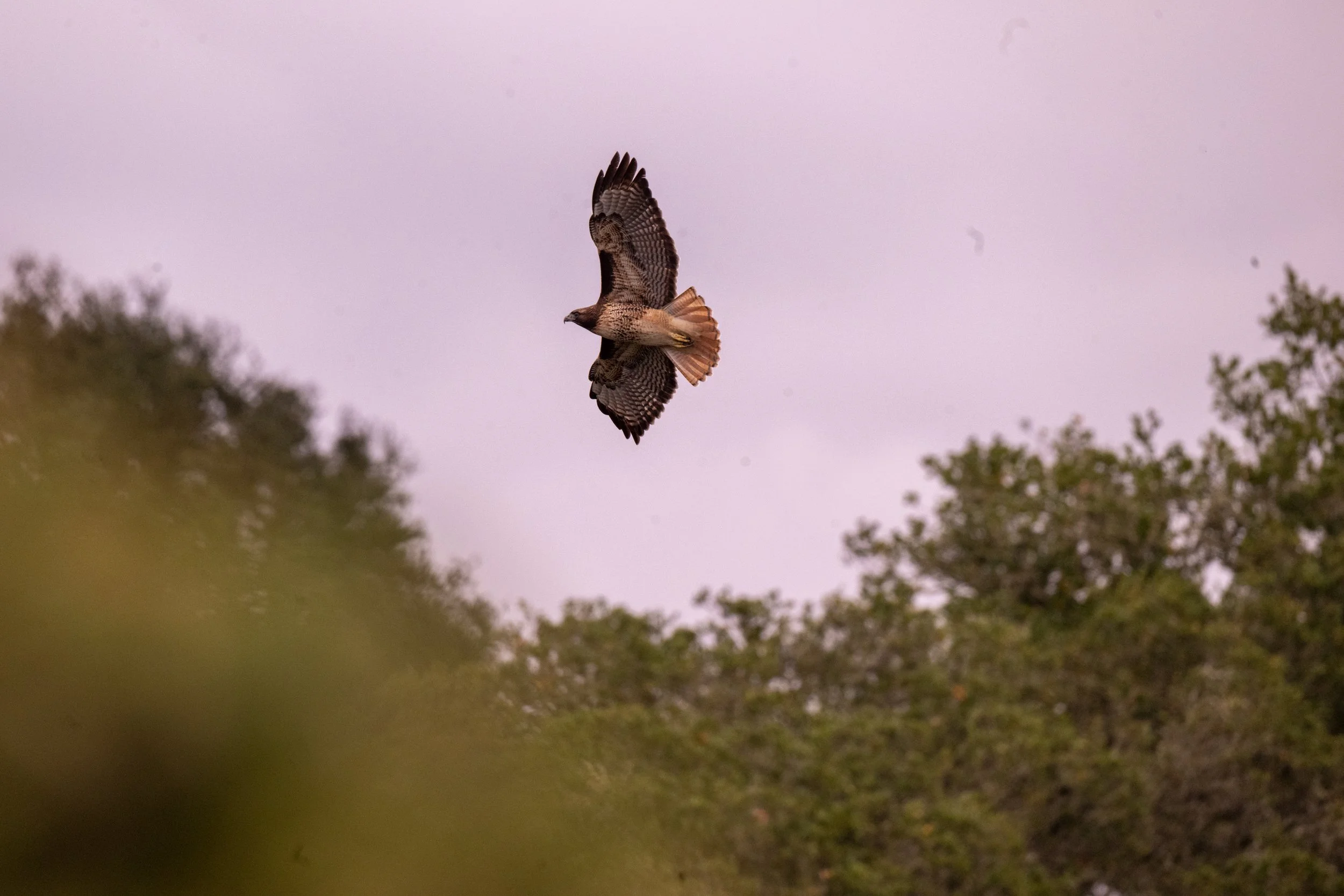
Red-tailed Hawk
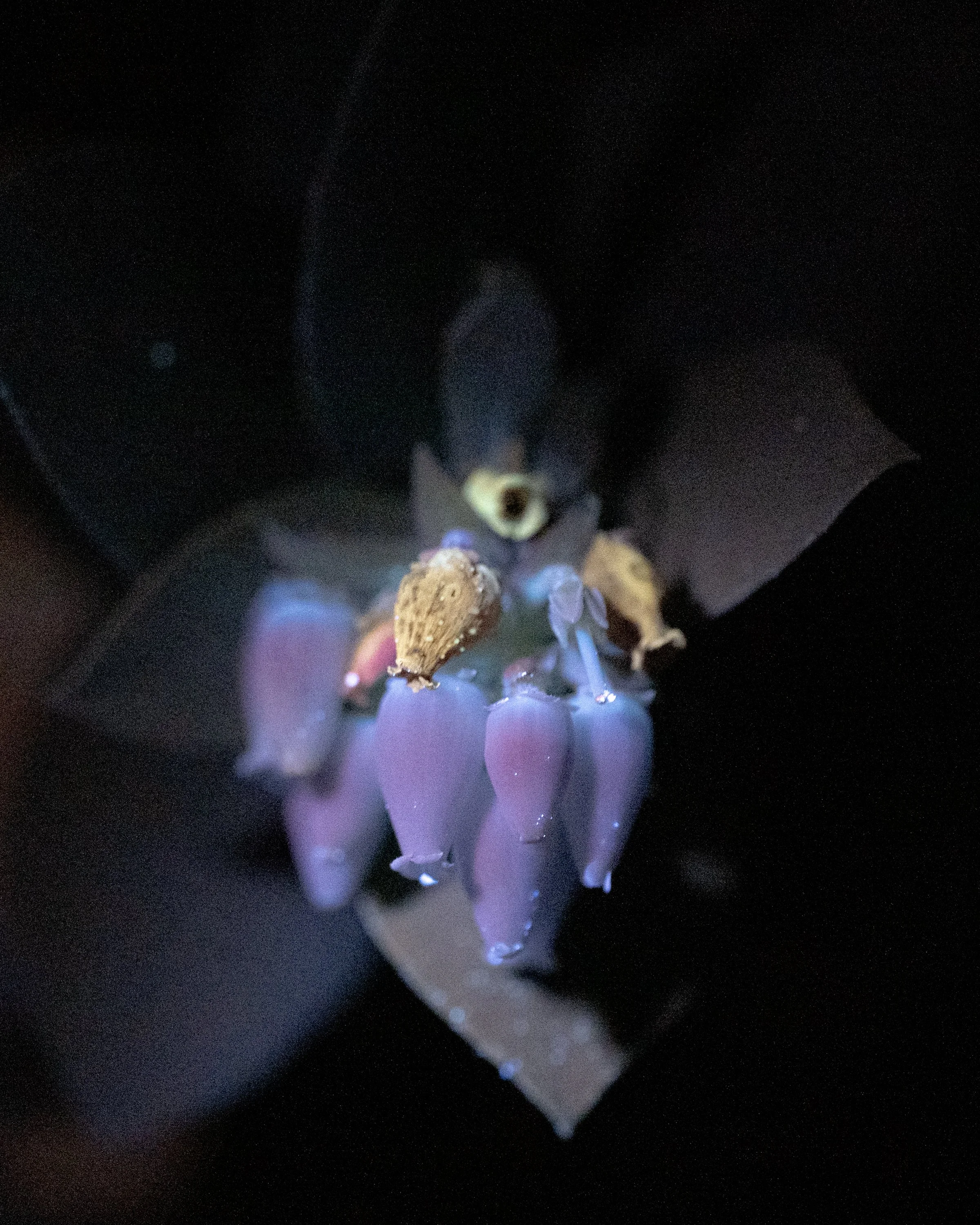
Pollen looks blue under UV light
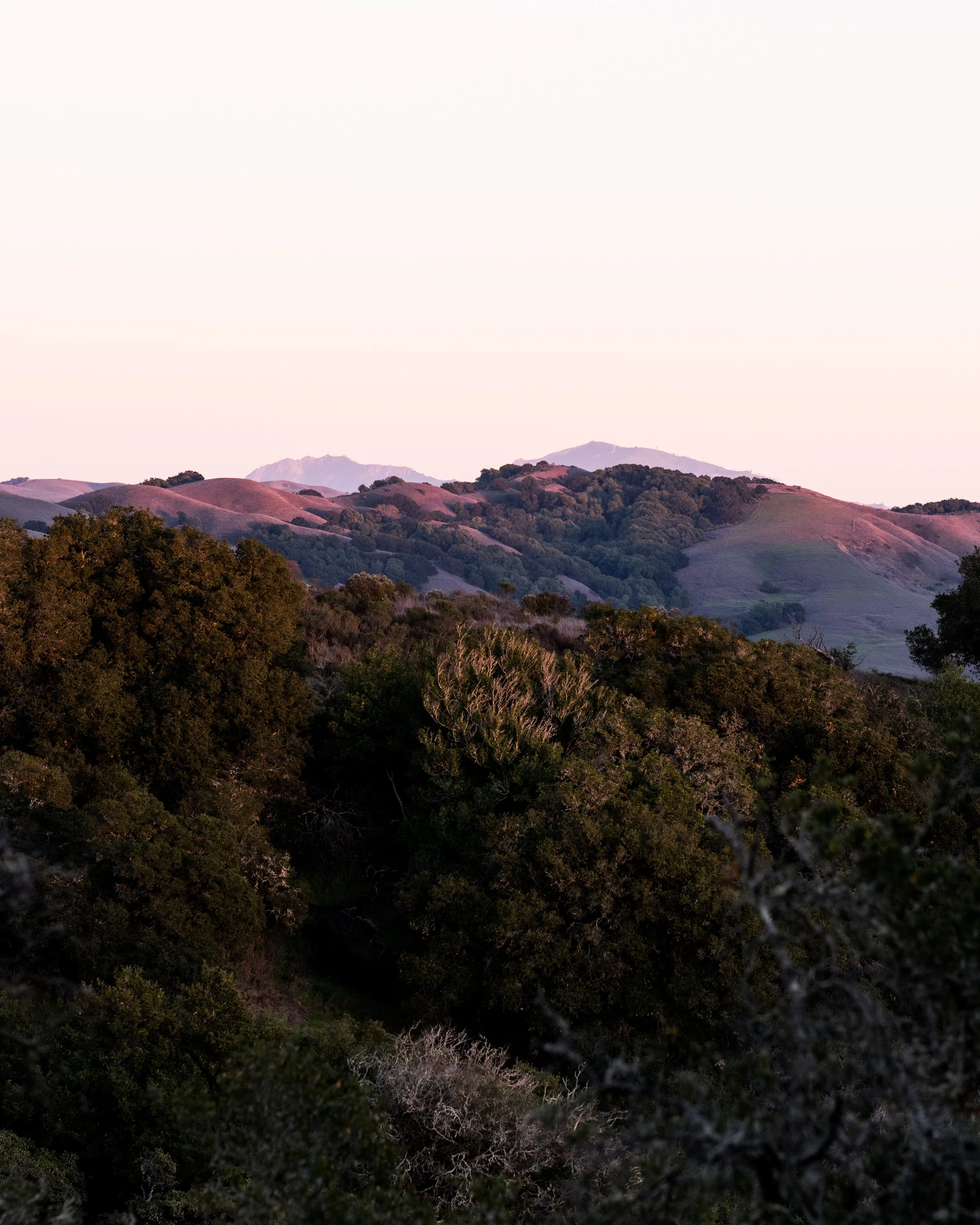
View of Mount Diablo from the ridge
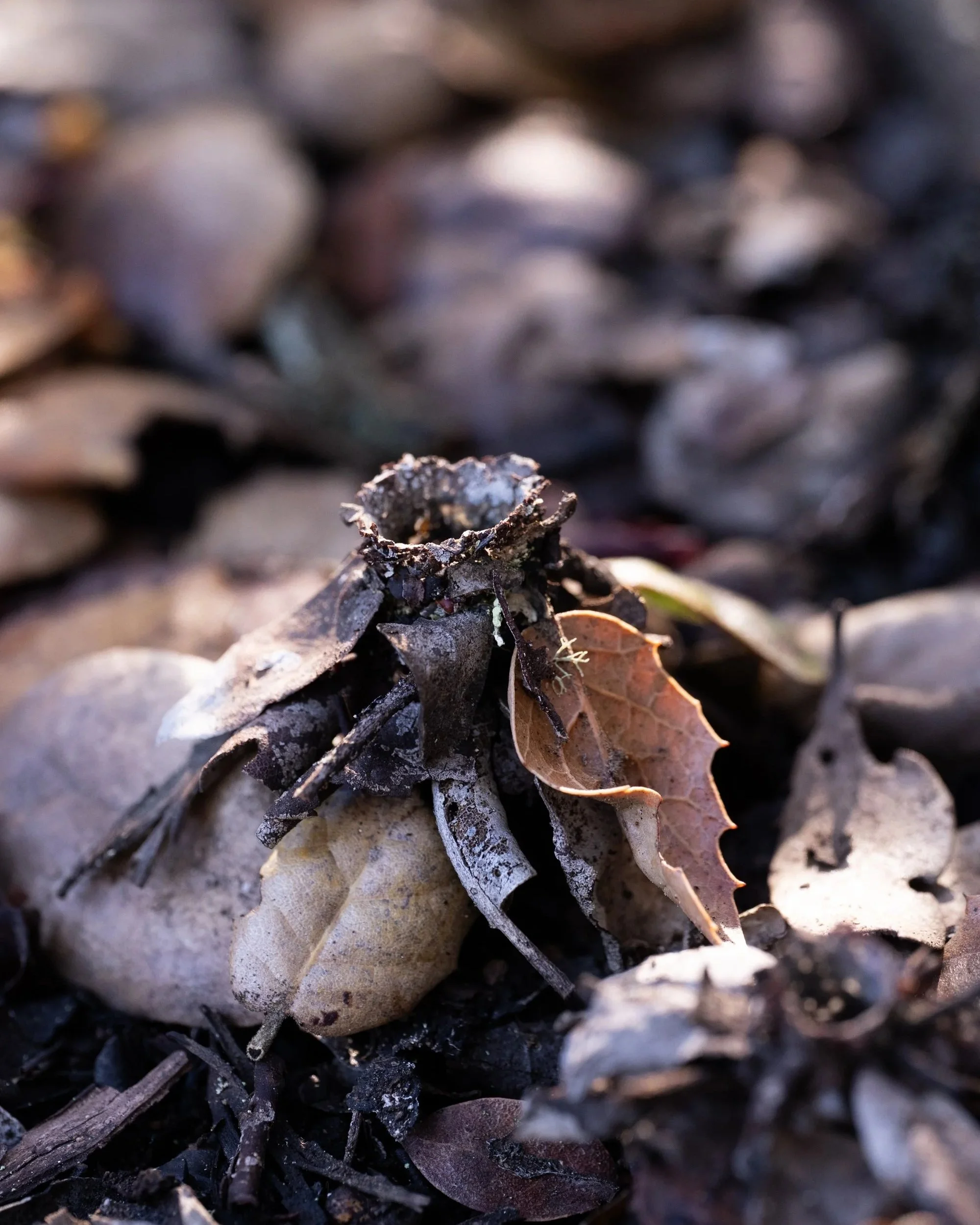
This Turret spider tower is decorated with leaves and sticks to camouflage it from unsuspecting prey
I invite you to share your Pallid manzanita stories in the comments. If you would like, please also include a line or two about yourself, and a social media and/or website link so folks can connect with you.